PyClass

Today
- Advanced Object-oriented Programming
Subclassing Built-in Objects: Default Dictionaries
import copy

class DefaultDict(dict):
    """Dictionary with a default value for unknown keys."""
    def __init__(self, default):
        self.default = default

    def __getitem__(self, key):
        if key in self:
            return self.get(key)
        else:
            ## Need copy in case self.default is something like []
            return self.setdefault(key, copy.deepcopy(self.default))

    def __copy__(self):
        copy = DefaultDict(self.default)
        copy.update(self)
        return copy


d = DefaultDict(0)
d[2] = "a"
print d[1]
print d[2]
Fibonacci
def fib(x):
    if x < 2: return x
    return fib(x - 1) + fib(x - 2)
Running Time:
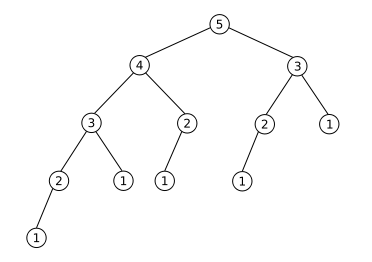
Speeding Up Fibonacci:
memo = {}

def fib(x):
    global memo
    if x in memo: return memo[x]
    if x < 2: return x
    val = fib(x - 1) + fib(x - 2)
    memo[x] = val
    return val
The memoize Decorator:
class memoize(object):
   def __init__(self, func):
      self.func = func
      self.cache = {}
   def __call__(self, *args):
      try:
         return self.cache[args]
      except KeyError:
         value = self.func(*args)
         self.cache[args] = value
         return value

@memoize
def fib(x):
    if x < 2: return x
    return fib(x - 1) + fib(x - 2)
Iterators:
range is a function, xrange is an iterator
class Counter:
    def __init__(self, low, high):
        self.current = low
        self.high = high

    def __iter__(self):
        return self

    def next(self):
        if self.current > self.high:
            raise StopIteration
        else:
            self.current += 1
            return self.current – 1

for c in Counter(3, 8):
    print c